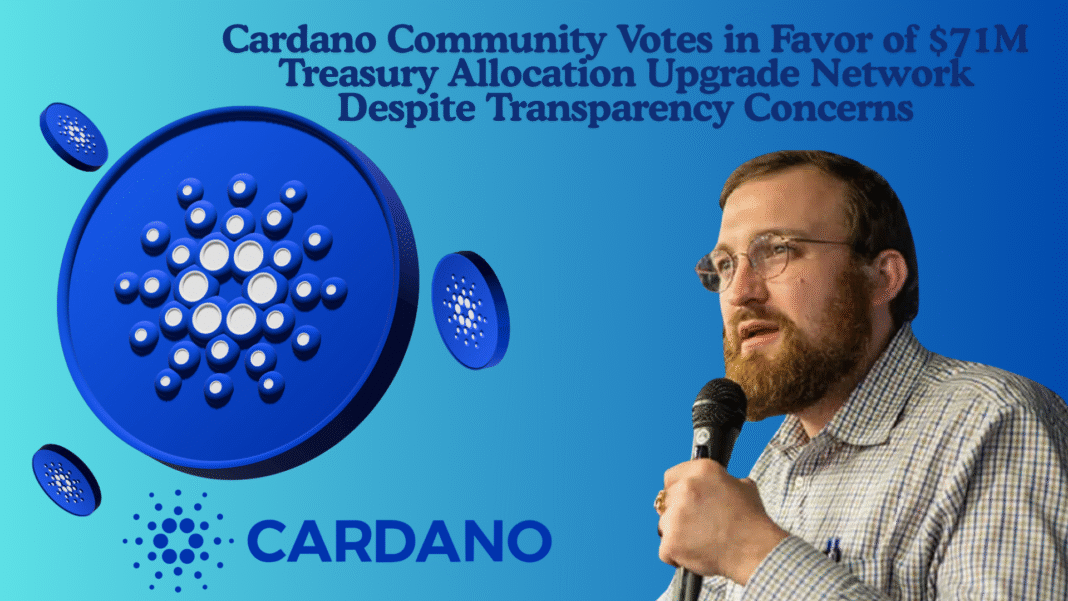


In a recent development, Cardano’s community has voted to approve the transfer of 96 million ADA, worth approximately $71 million, from the network treasury to fund a 12-month development road map led by Cardano’s core development team, Input Output Global (IOG).
The proposal was endorsed by 74% of voting stakeholders (200 yes votes, 6 no votes, and 7 abstaining), marking the first time Cardano’s community has approved core funding directly.
Input Output Global (IOG) hopes to dramatically enhance the network’s scalability, developer infrastructure, and interoperability with other blockchain ecosystems.
Features of the Development Plan include Hydra, Acropolis, and Performance Optimizations
The development roadmap approved includes several key projects. Among the flagship projects is Hydra, a protocol to enable low-cost, high-speed transactions in favor of greater throughput.
Another crucial component is Project Acutilus, modularizing the Cardano node architecture for easy integration by new core developers.
Apart from these, IOG is working on reduced RAM utilization and stake pool operator running costs, reducing performance, and laying technical building blocks for eventual smarter smart contracts.
These are projected to reduce average block times, which stand at about 20 seconds, as well as reducing the network’s average fee to 0.34 ADA.
Milestone-Based Funding Model with Multiple Layers of Oversight
To address concerns over transparency and accountability, the proposal includes a milestone-based funding scheme.
Funds will be released as milestones are met, and Cardano member-based organization Intersect will serve as an independent administrator.
Additional monitoring will also be implemented through the use of smart contracts and a special committee of oversight, according to IOG.
IOG has also committed to posting monthly progress reports, engineering timesheets, and quarterly budget statements so that the community can see how treasury funds are being allocated.
Community Also Raises Concerns Over Costs, Accountability, and Proposal Structure
The Cardano community shared notable views regarding the proposal. The proposal saw considerable debate at the community level before the vote.
A number of members noted that the requested funding was huge and questioned transparency in how the money would be spent and how IOG would be held accountable in delivering results.
There were talks to break up the proposal into smaller processes with separate budgets and votes to provide more detailed oversight.
Intersect never backed the opposing proposal from Cardano’s Technical Steering Committee (TSC) that had proposed an alternative approach to network upgrades and thus received scant support.
ADA Price Registers Slight Increase In Wake Of Broader Decline
Cardano’s native token ADA recorded a small price increase after the proposal was approved. Currently, ADA is trading at $0.7326 with a 24-hour volume of nearly $1 billion.
The price action is a 2.38% price gain for the past day, despite the fact that the token has registered a loss of 13.14% over the past week.
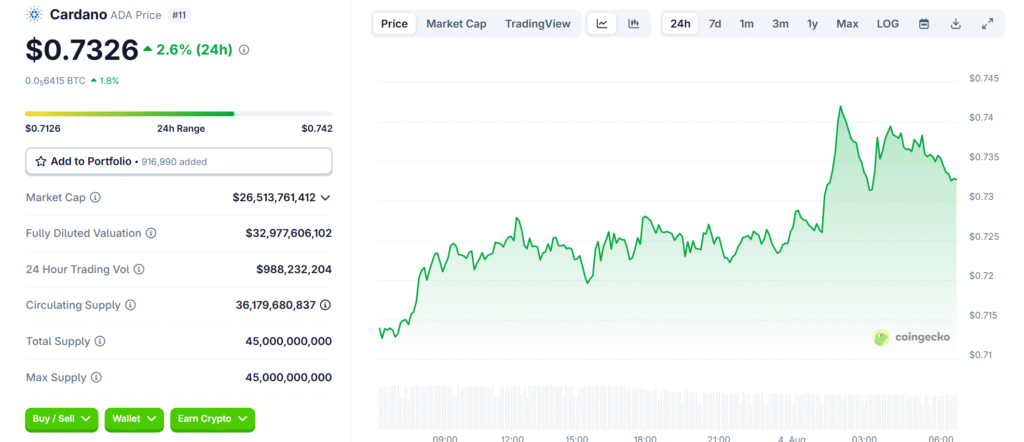
With a circulation supply of 36 billion ADA, Cardano retains a market cap of approximately $26.5 billion.
Community support for long-term growth despite problems reflects enormous underlying faith in Cardano’s growth and commitment to decentralized decision-making.