

Circuit, a digital asset security firm, has launched a breakthrough recovery protocol designed to address one of the crypto industry’s most persistent problems, irretrievable asset loss.
With the increasing adoption of cryptocurrencies like Bitcoin, the responsibility of self-custody has become a burden for both individual and institutional users.
Circuit’s newly unveiled solution, powered by its proprietary Automatic Asset Extraction (AAE) technology, aims to provide a safety net.
In the event of lost private keys or detected security threats, the system initiates an automatic transfer of the assets to a secure, pre-authorized vault.
The plan effectively eliminates the risk of permanent loss due to human error or malicious activity, offering a much-needed layer of protection for digital asset holders.
Institutional Adoption Begins with Tungsten and Palisade
The AAE-powered system has already attracted institutional partners, including UAE-based custodian Tungsten and custody infrastructure provider Palisade, both of which are early adopters of the technology.
These firms serve crypto exchanges and tokenization platforms, making asset protection a critical component of their operations.
Circuit’s founder and CEO, Harry Donnelly, emphasized that traditional finance principles like risk management and fiduciary responsibility must be mirrored in the digital asset space.
According to Donnelly, many institutions hesitate to enter the crypto sector due to the fear of irreversible losses, especially when handling high-value assets on behalf of clients.
Circuit’s recovery engine directly addresses that concern, positioning itself as a foundational tool for institutional-grade crypto custody.
Also Read: Thai Authorities Arrest Chinese National Linked to $6.1 Million Bitcoin Investment Fraud Scheme
Reframing Lost Bitcoin: From “Donation” to Dilemma
A longstanding view among Bitcoin purists is that lost coins are effectively a “donation” to the network, unrecoverable assets that reduce supply and potentially boost value.
Donnelly challenges this philosophy, particularly from the standpoint of institutional investors.
While the argument may appeal to some in the decentralized ethos, it creates a practical barrier to broader adoption.
According to Ledger, as many as 3.7 million BTC, representing up to 18% of total supply, are considered lost or inaccessible.
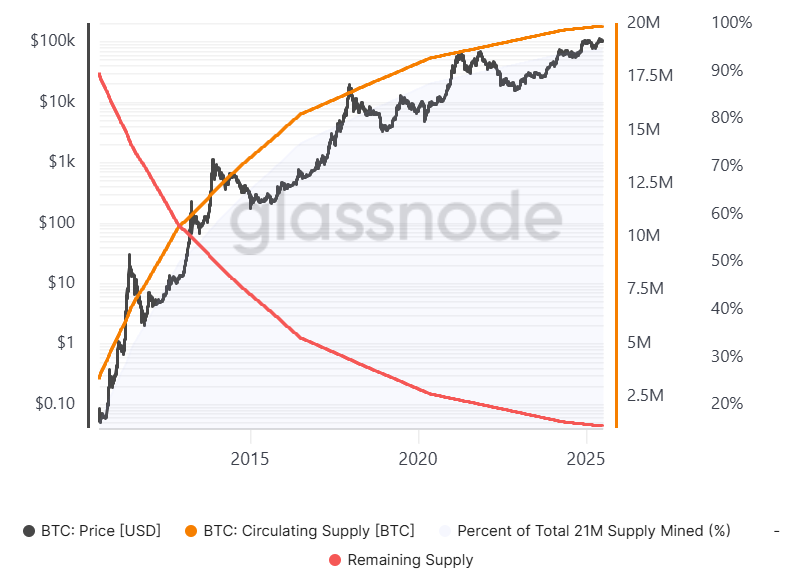
Donnelly argues that this level of financial fragility is unsustainable at scale.
“Most people simply aren’t prepared for full self-custody,” he notes, adding that the complexities and risks involved are a major reason traditional finance relies on intermediaries.
Circuit’s model acknowledges these risks and offers a solution that bridges crypto’s decentralization with real-world accountability.
Also Read: Spanish Coffee Chain Vanadi To Invest $1.1B In Bitcoin For New Reserve Strategy
Real-World Cases Highlight the Urgency for Recovery Tools
The crypto community has seen numerous cautionary tales underscoring the importance of secure asset recovery systems.
One of the most infamous examples is James Howells, who lost a hard drive containing an estimated £600 million in Bitcoin after accidentally discarding it in a landfill.
Despite years of legal efforts to recover the lost fortune, a judge recently dismissed his claim, citing a lack of reasonable grounds and no realistic prospect of trial success.
Stories like Howells’ exemplify why recovery tools like Circuit’s are crucial as crypto moves further into the mainstream.
Institutions and high-net-worth individuals need more than ideology, they need fail-safes. Circuit’s solution arrives at a pivotal moment, potentially reshaping the standards of crypto asset management and trust.