

House Republicans on Wednesday night in the House chamber at the U.S. Capitol adopted a rule to debate three cryptocurrency bills and fund the Pentagon.
They moved swiftly to end a two‑day standstill that had frozen the floor. Leaders struck a deal by adding a provision to block a central bank digital currency in the National Defence Authorisation Act.
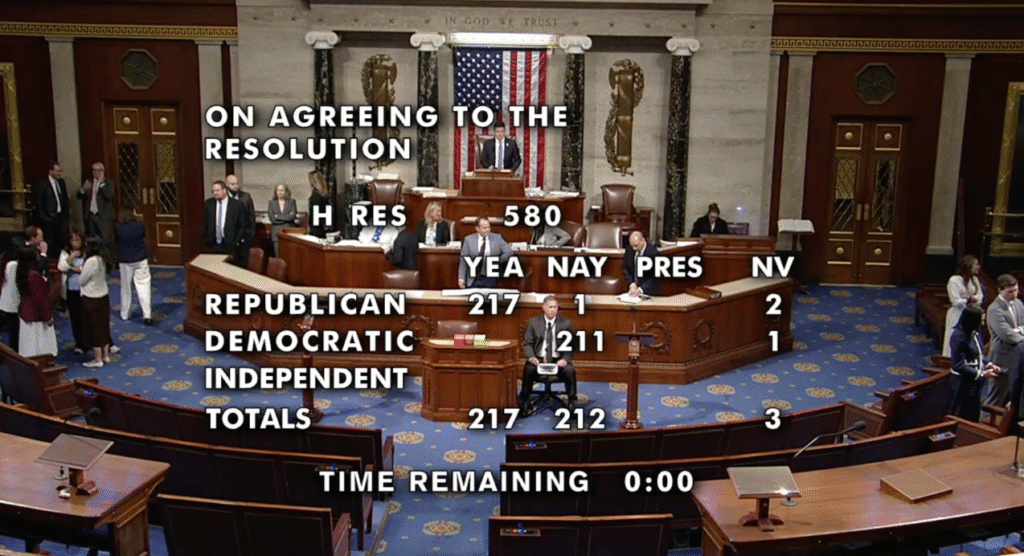
Stalemate Ends After Eight‑Hour Vote
Lawmakers spent over 8 hours on the motion, making it the longest floor vote in House history. Late Wednesday, the chamber approved the rule by a vote of 217 to 212.
A group of hardline Republicans had blocked the effort, bringing business to a halt. Negotiations behind closed doors finally produced an accord.
The breakthrough came when GOP leaders agreed to include language barring a central bank digital currency in the must‑pass defence bill. That concession addressed the main worry of the dissenting members.
They feared the crypto bills might pave the way for a digital dollar. Adding the anti‑CBDC clause to the defence bill ensured their support.
Also Read: White House Insider: US Government May Leverage Tariff Income to Accumulate Bitcoin Reserve
Shifting Votes Signal Deep Divisions
Several lawmakers changed their votes multiple times. Representatives Chip Roy (TX), Keith Self (TX) and Marjorie Taylor Greene first opposed reconsideration but later backed it at the last minute.
When the final rule was put to the test, Roy, Greene and Bill Huizenga (MI) voted no again. Huizenga is the vice chair of the House Financial Services Committee. His views highlighted concerns that the revised deal still has questions about the scope of crypto oversight.
Face‑to‑face talks with Speaker Mike Johnson (R‑LA) and President Trump helped seal the deal. “We had a very productive meeting,” Johnson told reporters.
He said everyone agreed on priorities and noted the president’s strong interest. Once the anti‑CBDC language was locked in, the holdouts switched their votes back to yes.
Next Steps for Crypto Legislation
With the rule now in place, the House can debate the three crypto bills and the fiscal year 2025 Pentagon funding measure.
One of those bills, the GENIUS Act, would set up a clear regulatory framework for stablecoins backed by the dollar. If the House approves it, the bill would go to President Trump’s desk. He has expressed eagerness to sign it into law.
The anti‑CBDC bill, known as the Anti‑CBDC Surveillance State Act, faces a tougher road in the Senate. Many lawmakers there remain wary of overhauling the currency system. Even with broad support in the House, it may struggle to clear the upper chamber.
Clarity for Digital Assets
The Digital Asset Market Clarity Act, another bill on the floor, aims to draw a firm line between SEC and CFTC oversight. Its goal is to give the crypto industry clear rules.
However, its prospects in the Senate are also unclear. Adding the anti‑CBDC language helped win House backing but did not eliminate all doubts.
By tucking the anti‑CBDC provision into the NDAA, GOP leaders ensured it joins a bill with a high chance of becoming law. The NDAA must pass each year to fund the military.
Even so, the final text can change during conference talks with the Senate. The provision could still be removed before the president sees the bill.
What Comes Next?
Now the lawmakers will have to discuss and debate each crypto measure on the House floor.
Final approval will only happen by the end of this week. Then it will move to the Senate for consideration.
People will closely watch these developments to see if crypto regulations can win over surrounding criticisms.
The end of the procedural logjam marks a pivotal moment for digital asset rules. With debate set to begin, the House takes a key step toward shaping the future of cryptocurrency in the United States.
Also Read: Trump Hosts Pakistan’s Army Chief In A Private White House Lunch To Discuss Crypto