

Arizona Governor Katie Hobbs has vetoed House Bill 2324, which aimed to set up a reserve fund for cryptocurrency assets taken in criminal cases. The veto came on Tuesday after the state’s lawmakers passed the bill by a vote of 34 to 22 last week.
Hobbs said the measure would discourage local law enforcement from partnering with state officials on digital asset forfeiture by diverting seized funds away from local agencies.
The governor’s decision can be overturned only with a two‑thirds majority in both chambers, a threshold that appears hard to reach unless some legislators change their minds.
What the Bill Proposed?
House Bill 2324 would have given the State Treasurer the power to create the Bitcoin and Digital Assets Reserve Fund. That fund was to manage any crypto obtained through criminal forfeiture.
If the governor had signed the bill, the fund could buy, sell, or hold cryptocurrencies and exchange‑traded funds that include digital assets. Supporters argued the move would turn seized crypto into a long‑term resource for state programs.
How Funds Would Be Shared?
Under the plan, the first $300,000 of crypto tied to a crime would go to the Attorney General’s office. Any amount above that would be split three ways. 50% would still go to the Attorney General. 25% would flow into Arizona’s general fund.
The final 25% would land in the newly formed reserve fund. This structure was meant to balance support for law enforcement, general state needs, and a dedicated crypto pool.
Governor’s Concerns
In her veto letter, Hobbs said the bill would “disincentivize local law enforcement from working with the state on digital asset forfeiture.” She worried that sheriffs and police chiefs might lose access to seized assets, which they rely on for equipment and training.
By funnelling a quarter of the extra proceeds into the reserve, the measure risked cutting local budgets at a time when agencies are already stretched.
Also Read: Kazakhstan National Bank Governor Announces Plans to Establish a National Cryptocurrency Reserve
History of Crypto Vetoes
This is not the first time Governor Hobbs has turned back crypto legislation. In May, she rejected Senate Bill 1025, which would have let the State Treasurer invest up to 10% of state funds in Bitcoin under a Strategic Bitcoin Reserve.
The governor argued that cryptocurrencies remain untested and volatile. Three crypto‑related bills have now failed under her pen, while only one has become law.
A Lone Success
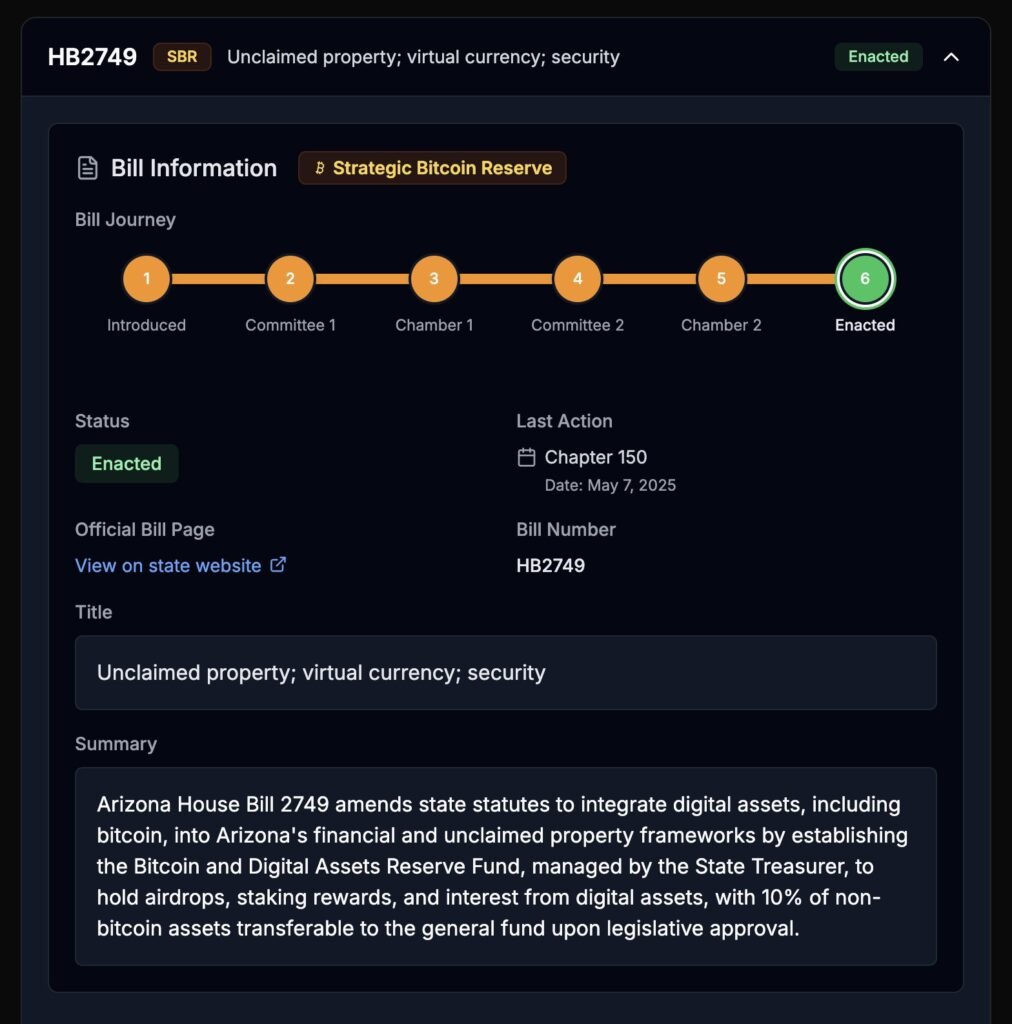
Arizona did manage to pass one digital assets measure this spring. House Bill 2749, signed in May, updated state laws to recognise crypto assets as part of financial and unclaimed property rules.
It also created a Bitcoin and Digital Assets Reserve Fund, though it focused on unclaimed assets rather than criminal forfeiture. That lighter‑touch approach won enough support to clear both chambers and earn the governor’s signature.
Other States on Crypto Reserves
Legislatures in other states are also weighing ways to hold Bitcoin or crypto in public funds. Last month, Texas Governor Greg Abbott approved the Texas Strategic Bitcoin Reserve, a fund to buy and hold Bitcoin as a long‑term asset.
In New Hampshire, lawmakers passed a bill in May allowing investments in cryptocurrency and precious metals. At least six other states have similar proposals in play.
What Comes Next?
With House Bill 2324 now off the table unless lawmakers gather a supermajority to override, Arizona’s law enforcement agencies will continue to use seized crypto under current rules.
Local sheriffs and police can still access these assets as before. Lawmakers who back the idea of a dedicated fund may return with a new plan, perhaps one that eases the governor’s budget concerns.