

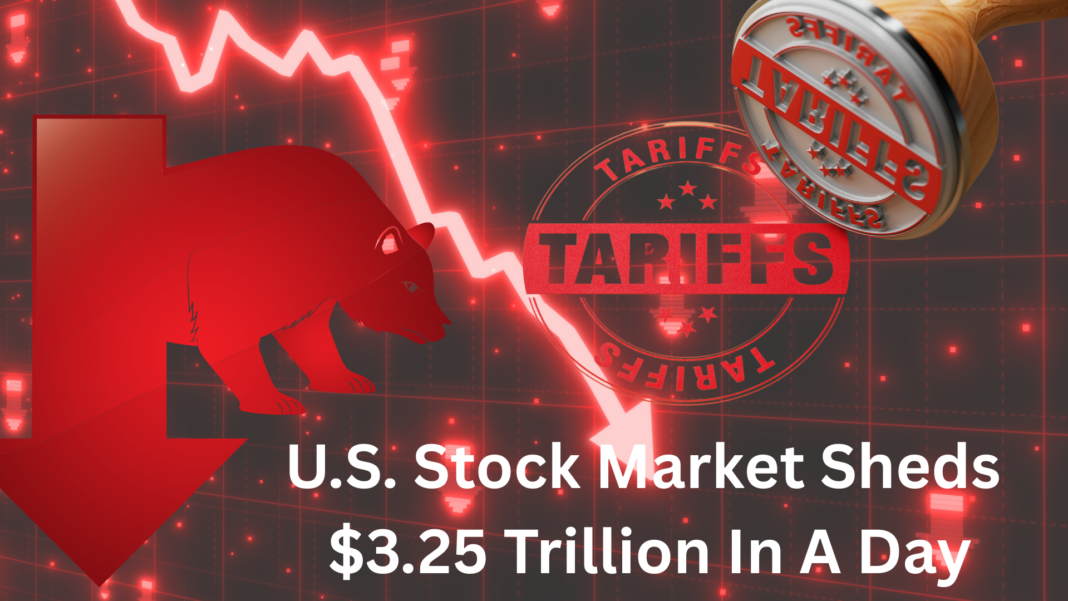


The United States stock market saw one of its worst trading days in recent memory on April 4. In just one session, the market lost $3.25 trillion in value, a number that exceeds the entire cryptocurrency market’s worth, which stands at roughly $2.68 trillion.
The sharp decline is being tied to growing investor concerns following former President Donald Trump’s aggressive new tariff policy announced earlier in the week.
Big Tech Takes a Beating
Tech stocks, particularly from the “Magnificent 7,” were hit the hardest. Tesla shares dropped by over 10%, while Nvidia and Apple both fell more than 7%. This drop led the Nasdaq 100 to plunge 6% in a single day, officially pushing it into bear market territory.
Financial analysts are now pointing to this downturn as the biggest daily drop since March 2020, when the COVID-19 pandemic first rattled markets around the world.
Recession Risks Rise
According to market commentary from The Kobeissi Letter, US stocks have now erased nearly $11 trillion in value since February 19. The account also claimed that with recession odds sitting above 60%, the country may be heading toward a financial downturn that is hard to avoid.
Trump’s April 2 executive order, which imposed a 10% baseline tariff on all imports, has raised fears of a prolonged trade war that could slow global economic growth.
What This Means for Crypto?
Interestingly, while the traditional markets plunged, the cryptocurrency sector remained relatively steady. With a total market cap of around $2.68 trillion, digital assets like Bitcoin and Ethereum did not see the same panic-driven sell-off.
Some investors may be viewing crypto as a hedge or alternative during traditional market volatility. Bitcoin, in particular, has continued to trade above $65,000, suggesting growing confidence in digital assets as a store of value during economic uncertainty.
Crypto Sentiment Remains Cautiously Optimistic
Despite the broader economic fears, the crypto market is holding up with surprising strength. Traders and analysts believe that part of this resilience comes from the belief that decentralized assets are insulated from government decisions like tariffs.
However, it’s still too early to say if this stability will last, especially if broader market conditions worsen or regulatory pressure increases.
The market’s sharp reaction to Trump’s tariff announcement has left investors on edge. While traditional stocks have taken a major hit, crypto has so far avoided the same fate. But with global uncertainty and recession fears growing, all eyes will be on how both markets behave in the coming weeks.