



 secure element.)
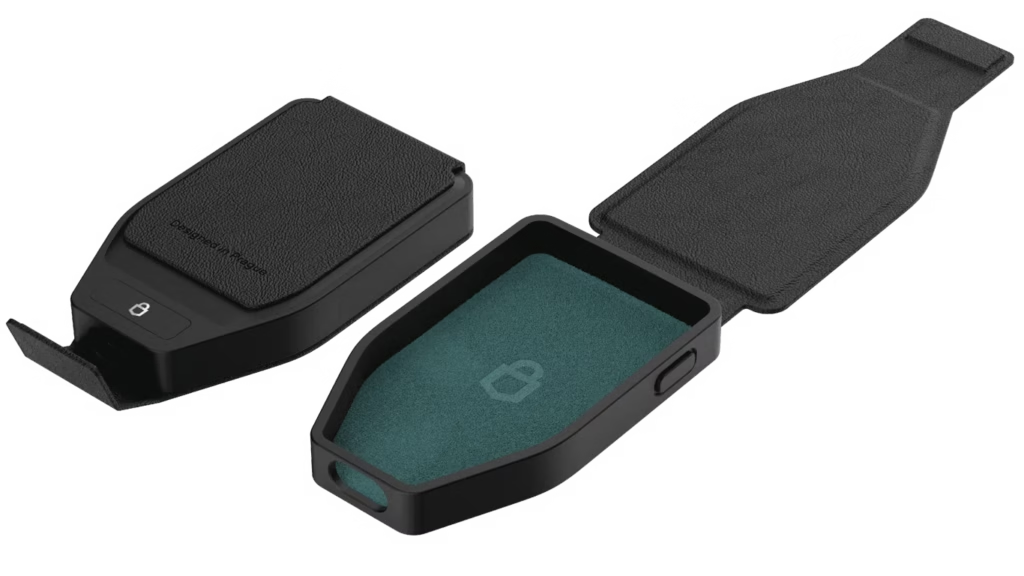
To protect crypto users from a Quantum attack, Trezor has released a new hardware wallet version that it says is ready for a post-quantum world and targets potential threats to digital assets.
“We anticipate future risks by building our devices to be secure not only against today’s threats but also tomorrow’s,” Tomáš Susanka, Trezor’s chief technology officer, said.
“A key example is quantum computing—a technology that could eventually break current cryptographic standards,” Susanka said. “With the Trezor Safe 7, we’ve introduced a quantum-ready architecture: Hardware that can support post-quantum cryptographic updates and a bootloader built on a hybrid classical and post-quantum signature scheme.”
Also Read:El Salvador Moves Bitcoin Reserves Of Worth $678M To 14 Wallets Amid Quantum Security Concerns
Safe 7 hardware wallet
A new technology called quantum computing takes advantage of the laws of quantum physics to do intricate computations far more quickly than conventional computers.
Quantum computers employ “qubits,” which may represent several states simultaneously through superposition and entanglement, in contrast to conventional computers, which store data as ones or zeros.
By decrypting private keys, this enormous computing power may one day crack the cryptographic protocols that protect cryptocurrencies.
Also Read: Quantum Firm Project Eleven Offers 1 Bitcoin to Anyone Who Can Crack Bitcoin’s Encryption
The security of wallets
Susanka said that when quantum-safe algorithms became necessary, Trezor devices would be ready to adapt without compromising the principles of self-custody or forcing users to migrate their keys to a new device. And he added that they believed long-term resilience began with preparation and that this was what they were building for.
However, there are still hazards for cryptocurrency investors today, even though that quantum future is still years away. According to Chainalysis, a blockchain analytics company, $2.17 billion had already been stolen from bitcoin services by the end of June 2025.
Also Read: Microsoft’s New Quantum Chip Raises Concerns About Bitcoin’s Future Security
Crypto thefts
The biggest theft in cryptocurrency history was the $1.5 billion ByBit hack in February, which was connected to the DPRK. Furthermore, by the end of the year, stolen funds from services would total more than $4 billion if present patterns continue. This year, almost 23% of stolen money is now the result of personal wallet hacks.
Susanka said the company wants to make a shift in how crypto users store their assets.“While exchanges and custodial platforms were once the default, high-profile failures and rising awareness of security risks have driven more users toward self-custody,” he said.
The number of crypto thefts and hacks has skyrocketed this year, and it has created a very serious matter for the cryptocurrency industry and its safety. It’s no surprise that technological advancements like these are going to help build more trust in the crypto industry and its security.
Also Read: Ava Labs Founder Emin Gün Sirer Warns of Quantum Threat to Satoshi’s 1M Bitcoins