
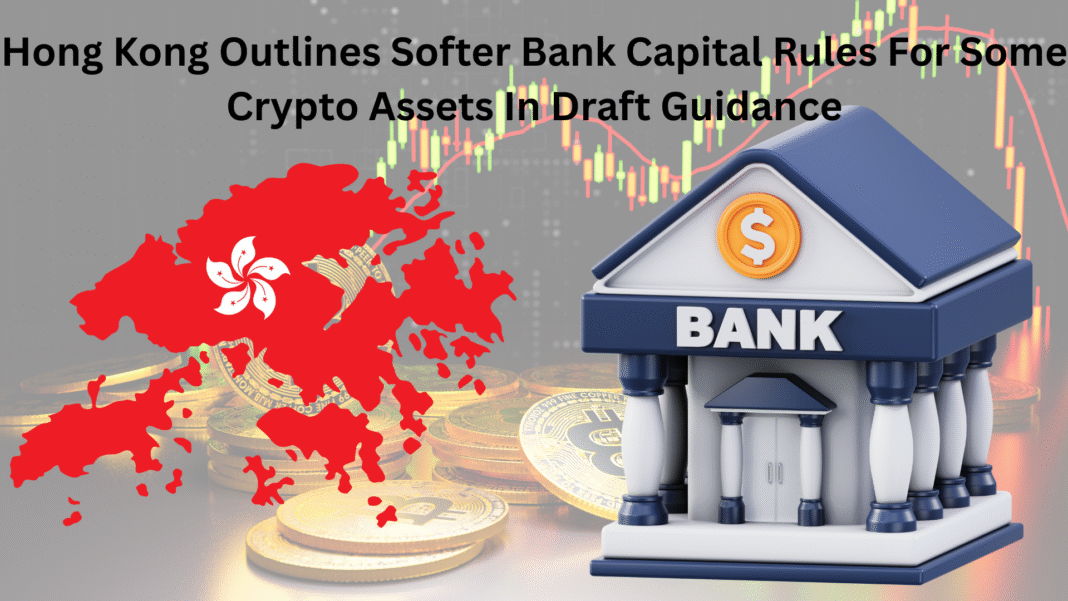


Hong Kong’s de facto central bank, the Hong Kong Monetary Authority, set out plans on Monday to ease capital rules for banks that hold certain crypto assets. The draft module, called CRP-1, was shared with local banks as part of a consultation.
The move, announced ahead of Basel-aligned rules coming into force in early 2026, aims to classify crypto assets that run on permissionless blockchains and let some of those assets attract lower capital charges if issuers show strong risk controls and safeguards.
What the draft says?
The draft guidance explains how Hong Kong plans to map the Basel Committee’s global capital standards to crypto assets. It focuses on assets on permissionless networks.
Under the proposals, tokens issued on these networks could face lighter capital treatment if their issuers adopt effective risk management. The paper lays out the criteria banks must use when they count these assets on their balance sheets. The guidance is now with local lenders for feedback.
Also Read: Hong Kong Unveils Digital Assets Policy Statement 2.0 With New LEAP Framework
Why does the move matter?
Lower capital requirements can make it cheaper for banks to hold or provide services for certain crypto tokens. That matters because banks are a main source of funds and services for big clients.
If banks face smaller capital charges, they may be more willing to offer custody, trading, or lending tied to those digital assets. This could speed up broader market activity in Hong Kong and help the city attract crypto business from other places.
Regulatory context
Hong Kong has been building rules for the crypto sector for some time. The city already has licensing frameworks for crypto exchanges and for stablecoin issuers.
In August, the SEC issued new guidance asking licensed crypto trading platforms to strengthen how they hold client assets. Separately, Hong Kong’s Stablecoin Ordinance took effect on August 1, 2025. That law will require stablecoin issuers to get a licence before they operate.
At the same time, mainland China maintains a strict ban on crypto trading and mining. That contrast has helped push some crypto firms and talent toward Hong Kong. Regulators in the city seem to be trying to strike a balance between allowing new business and keeping financial risks in check.
How would the proposals work?
The draft module sets out tests and safeguards, and banks would need to check how an asset is produced, how transparent its code and governance are, and how the issuer manages risks.
If an issuer can show it has strong controls, a bank might be allowed to apply a lower capital weight when it holds that asset. The exact thresholds and the final rules will depend on the feedback the HKMA receives from the industry during the consultation.
Industry reaction and next steps
The paper was shared with the local banking sector for comment, and the HKMA will review responses before finalising any rule changes.
The Basel rules that the guidance follows are scheduled to be applied in Hong Kong in early 2026, so there is a public window to shape how the city implements them.
For market participants, the consultation presents an opportunity to advocate for clear definitions and workable tests. For banks, the key question will be whether the risk controls required by issuers are practical and verifiable.
For crypto firms, cleaner rules on capital could reduce the cost of dealing with banks and widen access to traditional finance.
The HKMA’s draft is a sign that Hong Kong wants to remain competitive in crypto while still fitting itself into global banking rules.
The consultation will test whether regulators and industry can agree on standards that protect depositors and maintain bank stability, while allowing certain token types to be treated more like conventional assets.