




Bitcoin’s holding pattern has seen a major shift in the past two months. Ali Martinez highlights that there has been a 4.6% increase in large-scale holders over the last two months, with 76 new entities joining the network with more than 1,000 Bitcoin ($BTC).
This surge shows increased confidence in Bitcoin as an investment asset and a significant increase in institutional demand for the cryptocurrency.
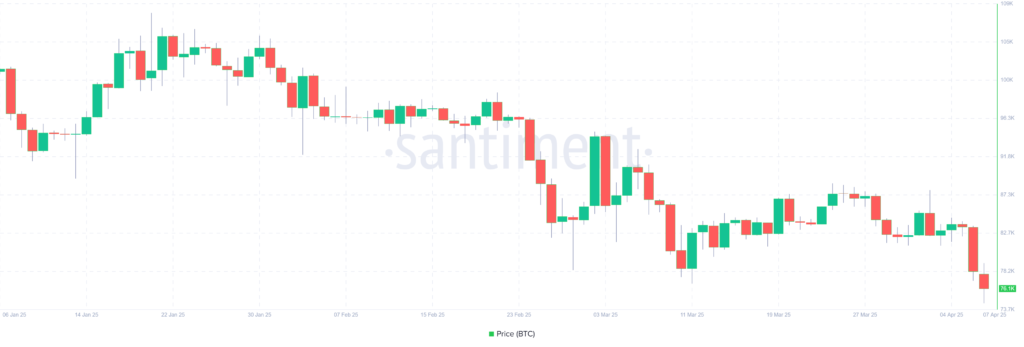
Interestingly the rise in institutional holdings comes amid a volatile trading period for Bitcoin which has seen the OG-crypto slump significantly from its previous highs.
At the press time, Bitcoin is trading at $76,197.68, down 8.21% in the last 24 hours.
Bitcoin’s Hype Among Big Institutions Sees a Significant Rise
A growing number of big organizations, such as corporations, hedge funds, and institutional investors, are adding Bitcoin to their portfolios as a store of value or as a component of larger digital asset strategy.
Despite market volatility, the 4.6% increase is noteworthy because it shows the growing institutional interest in Bitcoin. These newcomers are probably drawn to Bitcoin because of its decentralized, international nature, inflation-hedging capabilities, and long-term growth potential.
Bitcoin’s Hype Among Institutions Stays Important For Future Rise
The market dynamics of Bitcoin may change if more institutional players amass substantial holdings, impacting liquidity and price volatility.
For Bitcoin to become widely accepted and be incorporated into established financial markets, this increasing trend of institutional adoption is essential.
Additionally, it shows that the crypto industry is becoming more mature, with institutions contributing to asset class stabilization by bringing in additional funding and specialized infrastructure.
The increasing institutional demand for Bitcoin may lead to its wider adoption and possibly improve its long-term price trend.
Also Read: Strategy ($MSTR) Acquires Additional 22,048 Bitcoins for $1.92B; Now Holds 528,185 $BTC
New Trend Emerges Against The Backdrop of Volatile Trading
Global tariffs and economic uncertainty have exacerbated the volatility of Bitcoin’s price during the last two months.
Major economies’ trade disputes and increased tariffs have increased market volatility and impacted investor confidence in many asset classes, including Bitcoin.
Further stifling interest in digital assets has been the absence of encouraging market indicators, such as institutional adoption announcements or clear regulatory frameworks.
A lack of momentum for Bitcoin has resulted from cautious investor behavior brought on by this uncertainty, which has also decreased total trading activity.
Due to lackluster market conditions, the price of Bitcoin has changed more than usual, with traders responding to changes in the macroeconomic environment rather than to core developments in the cryptocurrency space.