
Keonne Rodriguez and William Lonergan Hill, co-founders of the crypto anonymizing platform Samourai Wallet, are to reverse their earlier legal path and plead guilty to criminal charges in a U.S. federal court.
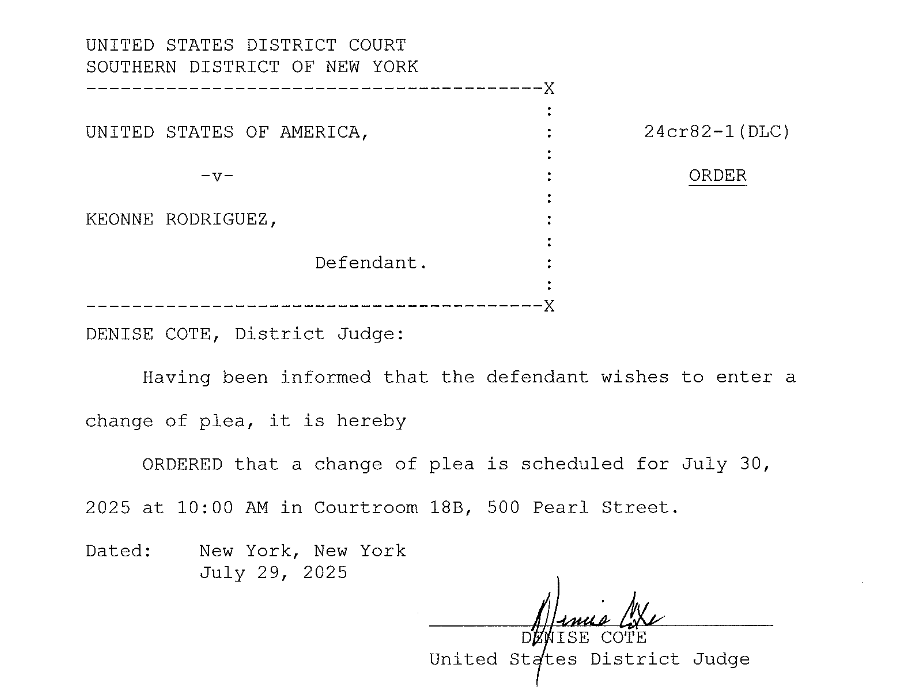
On Tuesday, court papers filed in the Southern District of New York revealed that the two men will enter their previous not-guilty pleas and plead to being involved in operating what officials describe as an unlicensed money-transmitting business.
Their plea hearings were scheduled for Wednesday morning before Judge Denise Cote.
This comes after a series of denials last fall, a few months after the duo denied all charges related to their crypto mixing service which allegedly helped move over $2 billion in allegedly illicit transactions.
Charges and Potential Prison Time
Rodriguez, former CEO, and Hill, chief technology officer of the platform, were indicted on two major charges in April 2024. The first was conspiracy to commit money laundering and operate an unlicensed money-transmitting business.
Prosecutors say Samourai Wallet was used to mask the origin of criminal proceeds from dark web markets such as Silk Road.
The charge of laundering can carry up to a 20-year jail term, with the unlicensed transmission charge carrying an additional maximum five years, for a total maximum of 25 years per defendant.
Although the guilty pleas may lead to reduced sentences for cooperation and other factors, there has been no word on any potential plea deals.
Also Read: US Court Orders Brazilian Founders of EmpiresX to Pay $130 Million in Penalties For Crypto Fraud
Previous Attempts to Dismiss Case Failed
The plea follows failed efforts by Hill and Rodriguez for months to have the case dismissed.
In April, their defense cited a Department of Justice memo from April 7 that said the government would not prosecute crypto mixers’ developers for accidental regulatory oversteps.
Furthermore, their attorneys charged prosecutors with withholding exculpatory information, i.e., legal advice stating that Samourai did not require a money-transmitting license.
But those efforts failed for the court, and the founders had to wait and suffer mounting legal heat. The November 3 trial date now appears unlikely to proceed as planned.
Also Read: US Court agrees to enter into a protective order in the United States vs Changpeng Zhao case
Crypto Mixers Face More Scrutiny in the U.S.
Samourai Wallet, like other cryptocurrency mixers, functions by gathering and sending users’ money around to obscure the source of transactions.
Notably, it’s a favorite among privacy advocates, but has regulators raising an eyebrow.
U.S. authorities have increasingly cracked down on such services, going further to argue they facilitate money laundering, sanctions evasion, and other illicit financial activity.
The case follows similar enforcement actions against other mixing platforms such as Tornado Cash.
With the guilty pleas of Samourai’s founders, regulators may be signaling a broader policy shift that emphasizes strict compliance with financial laws, even for decentralized or privacy-centric crypto tools.
Broader Legal Landscape: A Wave of Crypto and NFT Court Battles
At present, U.S. courts eye a variety of high-profile crypto-case matters, the Samourai case being one among them.
On July 24, an appeals court vacated a $9 million trademark victory for Yuga Labs in its lawsuit against artist Ryder Ripps, stating that there was a failure on the part of the plaintiff to establish consumer confusion.
This ruling set the first precedent in claiming NFTs as trademark-protected goods and thus governing digital assets on a legal tenor.
Also on July 25th, a federal court in the US denied Paul Logan’s motion for a default judgment in the lawsuit against the co-founders of the failed CryptoZoo project.
These developments, amidst a lot more, reflect an evolving legal landscape in the American legal system, with regulators and judges actively shaping the future of the crypto asset.